Quality marks on alloy wheels: what to look for besides the price
A wheel seller will gladly tell you about the spoke design, the colour and “forged strength” at a cast price. Who tested the wheel, and how, comes up far less often.

It is generally assumed that wheels are bought by eye: you like the design, the sizes match, the price suits, so buy them. As for quality, the story goes, you can only judge it from reviews, because wheels, unlike engine oils, undergo no independent testing. In fact that is not so. Independent tests of alloy wheels do exist, and their traces are left on the wheel itself. And if there is no such trace, that is an answer too, one worth remembering when you choose between expensive and cheap wheels.
Who tests alloy wheels?
There are several such “testers” in the world, and not all of them are European. Why should we care about Japanese or German marks, you may ask? Because wheels reach us from everywhere, carrying the marks of the markets they were made for.
1. UN Regulation No. 124. It covers wheels for passenger cars and their trailers and has applied since 2007 (Ukraine, for example, has applied it from the start). It concerns only a non-standard wheel that copies the standard one (the same width and diameter, offset and stud pattern); wheels of a different size are left by the Regulation to each country’s discretion. Before such a copy is approved, samples are spun many times on a rig under bending load and put through a rolling test, and alloy wheels are also hit with a falling weight and tested for corrosion. The result can be seen on the wheel itself: the letter E with the country’s number, and next to it 124R and the approval number.
2. The Japanese JWL and VIA. JWL (Japan Light alloy Wheel) is a standard of the Japanese transport ministry for alloy wheels, but the JWL mark is applied by the maker itself, on the strength of its own tests. VIA is another matter: it is a registration made after an independent Japanese testing organisation has checked a sample. So JWL means “I checked myself”, while JWL together with VIA means “I was checked”.
3. The German route. In Germany a non-standard wheel, including one in a non-standard size, can receive a national permit from the Federal Motor Transport Authority (KBA) on the strength of a report from a technical service such as TÜV. Such a wheel carries the letters KBA and a five-digit number on its visible side.
Standard wheels are approved together with the car, so they may carry no 124R mark, but the car maker’s logo and a part number will, as a rule, be there.
Where do you look for these marks on a wheel?
Turn the wheel over. The service markings are usually cast or stamped on the back, on the spokes or near the centre bore (size, part number, date of manufacture), while the approval mark is more often on the visible side. The size figures are explained in the article on wheel markings, and how to tell cast from forged is covered in a separate piece.
A test mark is applied to the wheel permanently (cast, stamped, etched or engraved), and a paper sticker over the paint is not a mark. (German rules do, however, accept a sticker under clear lacquer that was applied before painting.) Even so, a cast mark can be faked: in Japan a VIA mark without registration is called outright illegal. A mark on a wheel is like a hallmark on a gold ring: it does not make the seller honest, but you would hardly buy a ring with no hallmark at all.
What is “flow forming”, and is it forging?
Another lure of the price lists is wheels labelled “flow forged”, “rotary forged” or “spin forged”, noticeably cheaper than forged ones. The sales assistant will happily explain that this is “almost forging”. Is it? Of course not.
A flow-formed wheel is a cast wheel with a reworked rim. First a blank is cast (how cast wheels are made): the centre with the spokes and a short, thick rim. Then the blank is heated and spun on a mandrel, and rollers under pressure stretch the rim out until it becomes thinner, longer and denser. Such a rim is lighter and stronger than that of a cast wheel, and the wheel itself is cheaper than a forged one, which is real progress.
But the centre and spokes of such a wheel remain cast, and the word “forged” in the name does not make it forged. A forged wheel is pressed from a solid billet (more about forged wheels), while for the spokes and centre of a flow-formed wheel everything said about how cast wheels behave on potholes still holds. And the main rule does not change: a wheel that was heated during repair is scrap, cast or flow-formed alike.
Is the game worth the candle? If the weight of your wheels matters to you, especially with the big wheels of a crossover, perhaps it is. Decide for yourself, but pay for flow forming as flow forming, not as forged.
How do you check a wheel before buying?
1. Find a test mark. An E mark with 124R, JWL together with VIA, or a KBA number: at least one of these should be on a non-standard wheel (124R, remember, is found only on wheels of a standard size).
2. Check the mandatory markings. The maker’s name, rim size, offset, permissible load and date of manufacture (month and year): among other things, Ukraine’s rules for the technical operation of wheels, for example, require this. A wheel without the maker’s name or without a date of manufacture must not be fitted to a car: nobody is answerable for such a wheel in any way.
3. The sizes must suit your car. Width and diameter, stud pattern (PCD) and offset (ET) must be exactly what the car maker specified, the permissible load no lower than required, and the centre bore (DIA) the same or larger, but then with a spigot ring specified by the wheel’s maker. JWL and VIA speak only of the wheel’s strength, whereas 124R and a KBA number are tied to specific car models.
4. Documents and weight. Ask the seller for the document that goes with the wheel (for 124R, the list of cars it is approved for): your car must be on it, and the number must match the one on the wheel. And weigh all four wheels, as the article on replica wheels advises. A replica with a genuine approval mark is no longer quite such a lottery, but buying a replica with no mark at all is a definite no.
To sum up: if a non-standard wheel carries no independent test mark, that is your answer, and the price changes nothing. I would not fit such a wheel to my own car even for free. The miser pays twice, and with wheels sometimes not only in money.
Question and answer
- What do the JWL and VIA marks on an alloy wheel mean?
- JWL is a Japanese standard for alloy wheels, and the mark is applied by the maker itself: it tested the wheel and declares its own compliance. VIA means that an independent body has checked a sample of the wheel and the wheel is on a register. So JWL together with VIA counts for more than JWL alone.
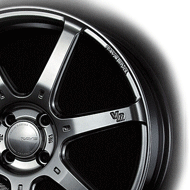 How do you tell forging from casting?How to tell a forged wheel from a cast one: what the markings say, why that rule has exceptions, and why only a laboratory can be sure.
Can you buy replica wheels?Can you buy replica wheels? Why even good ones lose their paint to de-icing chemicals, and why a single damaged wheel is hard to replace.
How do you tell forging from casting?How to tell a forged wheel from a cast one: what the markings say, why that rule has exceptions, and why only a laboratory can be sure.
Can you buy replica wheels?Can you buy replica wheels? Why even good ones lose their paint to de-icing chemicals, and why a single damaged wheel is hard to replace.