Wheel offset
What is wheel offset (ET)? The formula, positive, zero and negative offset, and what this wheel parameter affects.

What is wheel offset?
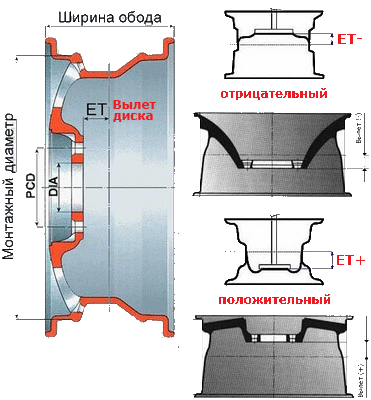 Wheel offset is the distance between the wheel’s vertical plane of symmetry and the wheel’s mounting face against the hub, in millimetres. The formula for working out a wheel’s offset is extremely simple:
ET=a-b/2, where
a is the distance between the wheel’s inner face and the wheel’s mounting face against the hub
b is the overall width of the wheel
From the formula it is easy to see that a wheel’s offset can be positive (most often), zero or negative. What’s more, a wheel’s offset directly affects the track width, because this parameter directly determines the distance between the centres of symmetry (across the width) of the wheels on one axle.
The same formula leads to another conclusion: a wheel’s offset is affected by neither the width of the wheel (and, accordingly, the tyre) nor its diameter. What matters for working out the design loads on the suspension is only the lever arm, that is, the distance from the centre of the tyre (across its width) to the hub. So the offset the car was designed for is a specific figure that the manufacturer specifies for each wheel size it has provided for, not a range of permitted values.
In the markings stamped on the inner face of the wheel, offset is shown as ETxx, where xx is the actual offset figure in millimetres. For example: ET45 (positive), ET0 (zero), ET-15 (negative)
Can you fit a wheel with an offset the car maker does not list, and why? (Everything about wheel offset.)