Cross-ply and radial tyres
How do cross-ply tyres differ from radial tyres? How both constructions are built and what advantages and drawbacks each has.

What is the difference between cross-ply tyres and radial tyres?
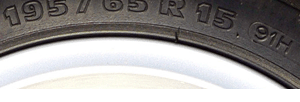
One of the compulsory items in a tyre’s markings is its construction type - radial or cross-ply. It has to be said that practically all modern car tyres are radial, simply because they offer more benefits to the consumer than cross-ply ones do. But both types of construction have their drawbacks, just as they have their advantages.
So what exactly is the difference? This calls for a few words about tyre construction in general.
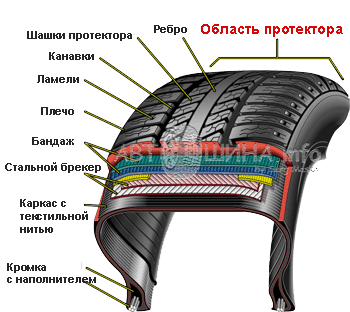
The basis of any tyre is its carcass. The carcass is made from several layers of rubber containing a textile cord, which gives the construction the strength and rigidity it needs.
On top, at the tyre’s outer diameter, makers add a few more layers known as the belt. The belt is a kind of foundation on which the tread is built. It is also made of rubber, but woven through with steel cord - this is, in essence, the tyre’s structure.
So, it is precisely the layout of the textile cords in the tyre’s carcass that determines whether it is radial or cross-ply.
In a cross-ply tyre the cords in the carcass run diagonally, from bead to bead, with the direction of the diagonal reversed in each successive layer (overlapping). Because of this, a cross-ply tyre’s carcass can only have an even number of layers (usually four). In a radial tyre, by contrast, the textile cords in the carcass run strictly perpendicular to the direction of travel - from bead to bead - which gives makers plenty of room to vary the number of layers.
The belt is built in roughly the same way in both types of construction - the steel cord there runs diagonally too, but at a very shallow angle.
What are the advantages and drawbacks of these constructions?
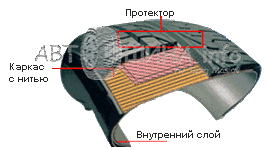
Construction of a radial tyre
A radial tyre holds its shape better, which has a direct effect on handling and driving safety. This is one of the main reasons why cross-ply tyres for cars have practically stopped being made. Another result of that stability of shape is better grip on the road and more even tread wear (all else being equal, such a tyre lasts longer).
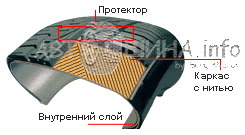
Construction of a cross-ply tyre
At the same time, a cross-ply tyre has much stronger sidewalls, which are far less afraid of cuts, punctures and tears. What is more, unlike radial tyres, the sidewalls of cross-ply tyres are entirely repairable - in most cases, where a radial tyre is fit only for a spare wheel or has to be scrapped altogether, a cross-ply one can still be saved and kept in service.
In any case, since motorists have no real choice today - practically every tyre sold on the market is radial - there is not much point in advising or debating anything here; take this article simply as background reading, for general knowledge. It is worth adding that the radial tyre was first developed by the Michelin group, and such tyres have been made since 1946.
 Tyre sizeTyre size is probably the most easily understood parameter for most motorists. That said, not everyone realises that keeping to the size the car maker specifies is essential for safe driving.
A cut in the sidewall: repair or scrap?Sadly, any damage to the sidewall of a radial tyre is, in all likelihood, already the end of its service life. Even so, many tyre fitters take on the repair of sidewall cuts in car tyres.
What is aquaplaning?Tyre makers and sellers never stop frightening motorists with every means available with that scary word - aquaplaning. And in the fight to save you from it, they will not spare a penny.
What are run-flat tyres?What are run-flat tyres? How they carry the car without pressure, how far and how fast you can go on them, and whether they are safe.
Date of manufacture of a tyreWhen buying new tyres, you must always check the date of manufacture of each one. Sadly, buyers, especially in Eastern Europe, are often sold last year’s tyres (if not older) at the price of new…
Tyre sizeTyre size is probably the most easily understood parameter for most motorists. That said, not everyone realises that keeping to the size the car maker specifies is essential for safe driving.
A cut in the sidewall: repair or scrap?Sadly, any damage to the sidewall of a radial tyre is, in all likelihood, already the end of its service life. Even so, many tyre fitters take on the repair of sidewall cuts in car tyres.
What is aquaplaning?Tyre makers and sellers never stop frightening motorists with every means available with that scary word - aquaplaning. And in the fight to save you from it, they will not spare a penny.
What are run-flat tyres?What are run-flat tyres? How they carry the car without pressure, how far and how fast you can go on them, and whether they are safe.
Date of manufacture of a tyreWhen buying new tyres, you must always check the date of manufacture of each one. Sadly, buyers, especially in Eastern Europe, are often sold last year’s tyres (if not older) at the price of new…
 Speed rating, load index, and tyre season markings againA tyre’s speed rating and load index are figures you must pay attention to when buying. The speed rating limits your maximum speed, and the load index shows the maximum weight of the car that can…